
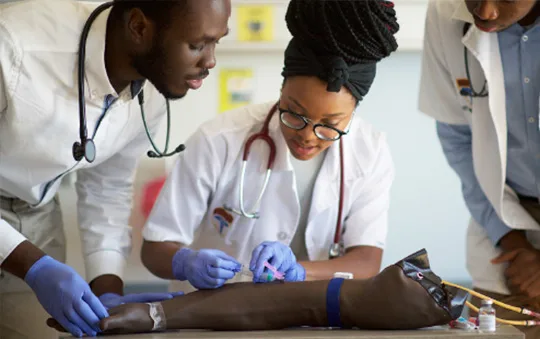
Description
Key Objectives:
- Understand phlebotomy, venipuncture, and capillary puncture processes.
- Apply safety protocols, including managing bloodborne pathogens.
- Identify proper venipuncture and capillary sites and ensure patient preparation and care.
- Utilize and manage phlebotomy equipment effectively.
- Perform phlebotomy procedures safely and address adverse reactions.
Career Outcomes:
Graduates may find employment in various healthcare settings, including:
- Hospitals
- Clinics
- Laboratories
Roles Include:
- Phlebotomy Technician
- Laboratory Assistant
- Medical Assistant
Program Curriculum:
PCT-101: Introduction to Phlebotomy (20/10)
Overview of phlebotomy practices, including definitions and ethical considerations.
PCT-102: Venipuncture Procedures (10/20)
Training on proper venipuncture techniques and patient preparation.
PCT-103: Capillary Puncture (10/15)
Techniques for performing and analyzing capillary punctures.
PCT-104: Bloodborne Pathogens & Safety (10/10)
Comprehensive training on pathogen handling and safety protocols.
PCT-105: Patient Monitoring & Reporting (10/10)
Methods for patient care, charting, and documenting procedures and results.